
Public health is the science of protecting and improving the health of people and their communities. However, I do not believe this definition does the concept any justice. I believe public health is the essence of what keeps our global community alive. The network keeps our global community together and living on forever. Without public health, humanity would run in chaos. The order that organizations like the Centers for Disease Control (CDC), the World Health Organization (WHO), and every supporting health organization maintains would cease to exist. The significance of public and global health is something that I am beyond grateful to have learned, as its inner workings control the well-being of every population across the globe.
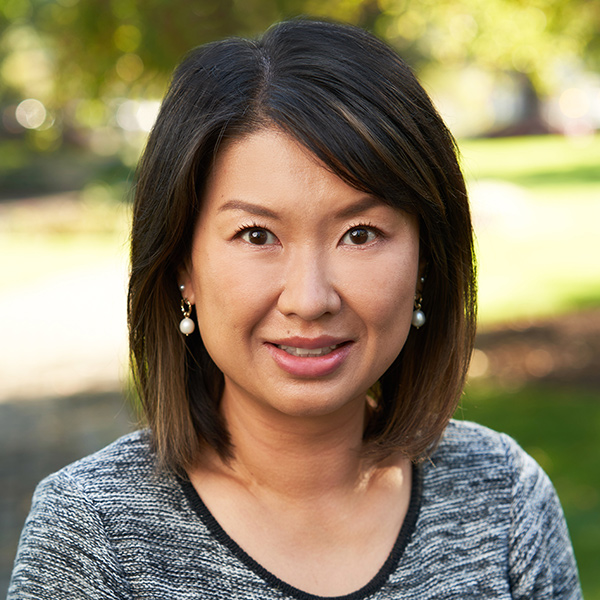
Su Jin Jeong, a professor in the public health department at the University of Evansville in Evansville, Indiana, strives to build an understanding of how public health is integral to our lives every day in the classroom. This semester, I had the opportunity to take her Global Health Issues class for my public health minor. Since the first day I walked into class, I knew she was someone I could listen to for hours. I knew she could use her unique perspective to teach us how global health is integrated into every one of our lives. As she teaches, Dr. Jeong brings light to every issue we discuss by incorporating parts of her research, what she has seen through her travels and her expertise from her DrPH in maternal and child health.
Dr. Jeong came to the United States to live in the south with her mother and father when she was 9. She has had experience going to military hospitals and clinics growing up because her dad was in the military. Her family utilized the health care system within the military bases in countries like Korea and the States. Since then, she has traveled frequently to Korea and other countries and seen the healthcare systems in those areas. This has opened her eyes to the differences in approaches to health and healthcare systems that exist here and abroad.
As she grew up, Dr. Jeong never knew she wanted to be in the public health industry. Still, shortly after obtaining a bachelor’s degree in communications from the University of Alabama, she felt drawn to public health. She especially felt connected to the maternal and child health sector of the field. This led her to obtain her DrPH degree in maternal and child health policy and her MPH degree in global maternal and child health from the University of Alabama at Birmingham.
During Dr. Jeong’s master’s program, she was given the opportunity to go to a rural part of Jamaica to do research on Pap smear reporting. She was able to interview women in the area on the status of their Pap smears. This included information like when they got it, when they received the results, and she examined what that meant for the progression of women’s health within Jamaica. Along the way, she would meet women who had gotten a Pap smear but hadn’t gotten any results. Some of these women were far into the late stages of cervical cancer before they could even find out they had cancer. Doing things in real-time and gathering data, rather than collecting it from databases, opened Dr. Jeong’s eyes to the “real” part of maternal and child health, the reality that includes a lack of access to effective screening for cervical cancer and other diseases that kill populations. Much like with many other lessons she shares, she started by bringing light to the concept that every global issue we talk about can be tied to poverty. Access is an issue in many developing countries.
Outside of her research and academia, Dr. Jeong gained the opportunity to visit a variety of countries. In doing so, she was able to expand her knowledge of various populations and how culture had an impact on their health. Specifically in Romania, the gypsy populations were ostracized, leading to restricted access to education, good nutrition, or hygiene. The gypsy population was forced to live outside regular communities and segregated from general populations. In a small village Dr. Jeong visited, the electrical lines stopped outside of the village, meaning they didn’t even have access to electricity. There were no paved roads, and many children did not have shoes, so they ran around barefoot, even in the colder months. There were even incidents where many children died from accidents and injuries due to the unsafe environment they were born into. “It’s really hard for you to get yourself into a successful position if you’ve grown up in an environment where nothing is offered to you, and people discriminate against you,” she says. A gypsy woman Dr. Jeong met exemplified this issue perfectly. The woman was well-educated, and she wanted to be a teacher. However, no one would hire her because she was a gypsy. Caste, race, creed, sexuality, and gender are just some distinctions that build stigmas that impact health outcomes. Many gypsy children went hungry because no one would give their parents jobs, and income was constantly an issue in their community. Dr. Jeong also believes that “Stigma stymies all of the opportunities you could have access to if you are discriminated against.”
Interestingly enough, race-based discrimination was not much of an issue in Jamaica. Dr. Jeong was approached and asked, “Why are Americans so concerned with race? In Jamaica, we’re all Jamaican.” In America, we distinguish ourselves as Asian-American, African-American, or some form of American. This led Dr. Jeong to consider how issues of discrimination and systemic racism that we face in the United States may not always be present throughout the world. In many places, it can be based on class, religion, and caste, but it may not be based on race as much.
Based on Dr. Jeong’s experiences, she believes that people from the United States should do a better job of understanding people around the world. Many populations worldwide are judged through the American standard and seen through the American lens. There is a failure to understand people outside the States. She encourages people to take the time to travel and dispel preconceived stereotypes about the world. Through her research, she maintains the goal of understanding cultural differences, health disparities, and outcomes. Her experiences have shaped her views on social justice and societal inequities in different settings. Her research and experiences informed her work in the U.S., examining community health and health disparities related to race and gender and thinking outside of the box when approaching issues related to social determinants of health.
This coming summer, Dr. Jeong is not entirely sure of her plans. However, she typically works on papers that need to be written for publication or works with community organizations. She plans to travel to Korea and may apply for another Global Scholar award to expand on her work with postpartum care or even gerontology support in Korea. She was previously awarded the Global Scholar award to pursue research and collaborative work regarding postpartum care differences in the U.S. versus South Korea and the implications of that difference as related to infant and maternal mortality in 2018.
The world deserves more amazing professors like Dr. Jeong. To learn more about Dr. Jeong or the University of Evansville’s public health department, use the link to the website below!
https://www.evansville.edu/institute-public-health/staff.cfm
 Rising Echo