
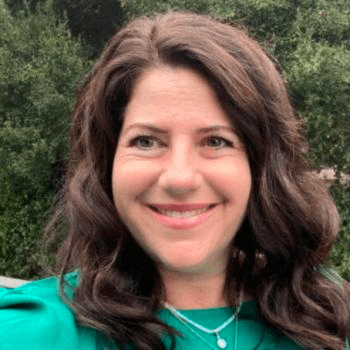
As I sat enraptured during Dr. Nicole Tyson’s lecture on Medical Education Across Generations, her unique insight into future caretakers and doctors resonated with me deeply. The passion she exudes in her role as a mentor drew me in, and I knew that she was someone I knew I would love having a conversation with.
As an adolescent gynecologist and Clinical Professor of Obstetrics and Gynecology at Stanford University, Dr. Tyson specializes in caring for young women facing reproductive health issues. From her work with addressing abnormal periods to hormone management, adolescent contraception in people with underlying medical conditions, pelvic masses, and differences of sex development and complex utero-vaginal anatomy, Dr. Tyson approaches her work with great dedication and compassion.
Her medical journey began in Boston where she pursued her medical education at Tufts University School of Medicine. Her commitment to improving women’s health led her to complete her residency at University of California, Davis in Obstetrics and Gynecology. Since then, she has worked to make progress in the field in several manners. Taking on various leadership roles within the field, she has served on several national medical committees. She also actively contributes to peer reviewed literature and research, has established curricula in Gynecology, Pediatric Adolescent Gynecology, Stimulation Education, Surgical Coaching, and Leadership and Professionalism. Further recognizing the importance of education, she is serving as a chief editor for 2 pediatric adolescent gynecology textbooks–PAG essentials and the first PAG surgical textbook. Her passion for serving and guiding others is exemplified through her role as the chief of Pediatric and Adolescent Gynecology at Stanford Children’s Hospital and the Director of mentorship and coaching for the Ob/Gyn department.
How it began
Dr. Tyson embarked on her medical journey with the initial aspiration of becoming a pediatrician. During her early experiences, she immersed herself in a subspecialty rotation, focusing on children with cardiac problems. Unfortunately, many of these young patients faced life-threatening conditions, and she encountered a distressing number of cases involving child abuse in the ICU. Confronted with the harsh realities of pediatric care, Dr. Tyson decided to redirect her career towards a different specialty. As she progressed in her medical career, Dr. Tyson had the opportunity to collaborate with two physicians specializing in reproductive organ anomalies. Their unique approach, characterized by the absence of white coats and direct communication with teenagers, left a lasting impression on her. Inspired by their patient-centric approach, she envisioned a similar trajectory for herself. This pivotal moment led Dr. Tyson to transition her focus to obstetrics and gynecology (OB/GYN). During her residency, she discovered a passion for adolescent healthcare. Motivated by this interest, she initiated a teen clinic, where she dedicated herself to the well-being of both pregnant and non-pregnant teenagers. Over time, the implementation of improved contraception and educational initiatives resulted in a notable reduction in teen pregnancies under her care. Dr. Tyson’s commitment to comprehensive healthcare and her proactive efforts in addressing adolescent needs have defined her transformative journey in the medical field.
Advocacy for Comprehensive Sexual and Reproductive Health
Dr. Tyson emphasizes the crucial importance of educating individuals about their bodies at an appropriate age, ideally before they undergo significant and relevant changes, such as discussing puberty before its onset. However, various challenges hinder this educational process, encompassing politics, emotion, personal beliefs, religion, and even trauma. Despite the complexity of the issue, Dr. Tyson contends that young people should be afforded the opportunity to learn about their bodies in an age-appropriate manner. “The idea is to meet people where they are. Sometimes that’s a whole group of people supporting one patient,” she states.
Dr. Tyson contends that public schools fall short in adequately educating young men and women about sexual education. While actively engaging in sexual education discussions, she integrates her expertise from professional, maternal, and community volunteer perspectives. Unfortunately, many of the schools she volunteered at obstructed her efforts by blocking slides, denying access, or imposing restrictions on topics she wished to address. Constrained to discuss only “safe” subjects like acne, armpit hair, and body odor, Dr. Tyson resiliently navigated within the system. Notably, she implemented creative solutions, such as allowing children to submit questions on notecards, providing a platform to address their inquiries separately.
On a positive note, zooming out to the broader context, in her time as a physician, she believes the field has experienced transformative advancements due to innovation and research, particularly concerning IUDs, implants, and long-acting reversible contraception. She supports the dissemination of more information, reevaluation, and promotion of these options for young people to enhance their reproductive health. While advocating for abortion rights, she underscores the paramount importance of preventive measures for pregnancy. In the realm of education, she notes a positive shift toward a less fear-based approach to sex education. Society is reframing the narrative to view sex as normal, healthy, and a matter of personal choice. This evolution, characterized by a departure from judgmental attitudes, is evident not only in the adult world but has also permeated the adolescent world.
Future goals and Aspirations
Dr. Tyson centers her life around a few core future goals. Number 1: To witness an improvement in the lives of young people in all aspects of their reproductive health, granting them the freedom to make their own choices. This includes access to healthcare, birth control, abortion, pregnancy care, and postpartum care. Number 2: To reach a point where there are significantly more pediatric adolescent gynecologists worldwide.
“The more people that we teach, including patients, colleagues, residents, medical students, and college students, we spark further medical literacy, allowing accurate information to be spread, similar to the telephone game.”
-Dr. Tyson
Making more changes and fostering a better understanding can enhance the system, leading to improved quality of life for women in their care. Although things may not always come easy and obstacles may be encountered, overcoming them is possible. Having a 5-year mission statement is highly beneficial, allowing for periodic reevaluation to assess progress. This serves as the driving force for the individual, and it is crucial to align actions with the mission statement while confidently saying no to things that do not fit.
Closing reflection:
Reflecting on my conversation with Dr. Tyson, her proactive nature emerged as a striking attribute. In response to my inquiry about advice for our blog viewers, she shared some valuable insights:
“Just start. Find a place and go for it. While challenges may arise and obstacles may be encountered, remember that overcoming them is part of the journey.”
I hope you all have enjoyed reading about Dr. Tyson as much as I’ve loved writing about her! To learn more about her, you can visit the following website!
 Rising Echo